
Guide
Why Garage Doors Fail in Boone Winters
Most Boone homes date to 1968-1997, built before modern insulation and wind-load rules. Here's what that means for your garage door in severe cold weather.
Local detail
Where People Go Wrong
Most advice you'll find about garage doors is written for a house that doesn't exist here. It tells you to spray some lubricant on the hinges and call it done. That works fine in a climate that doesn't swing hard, on a door built to a code that assumes some insulation in the panel.
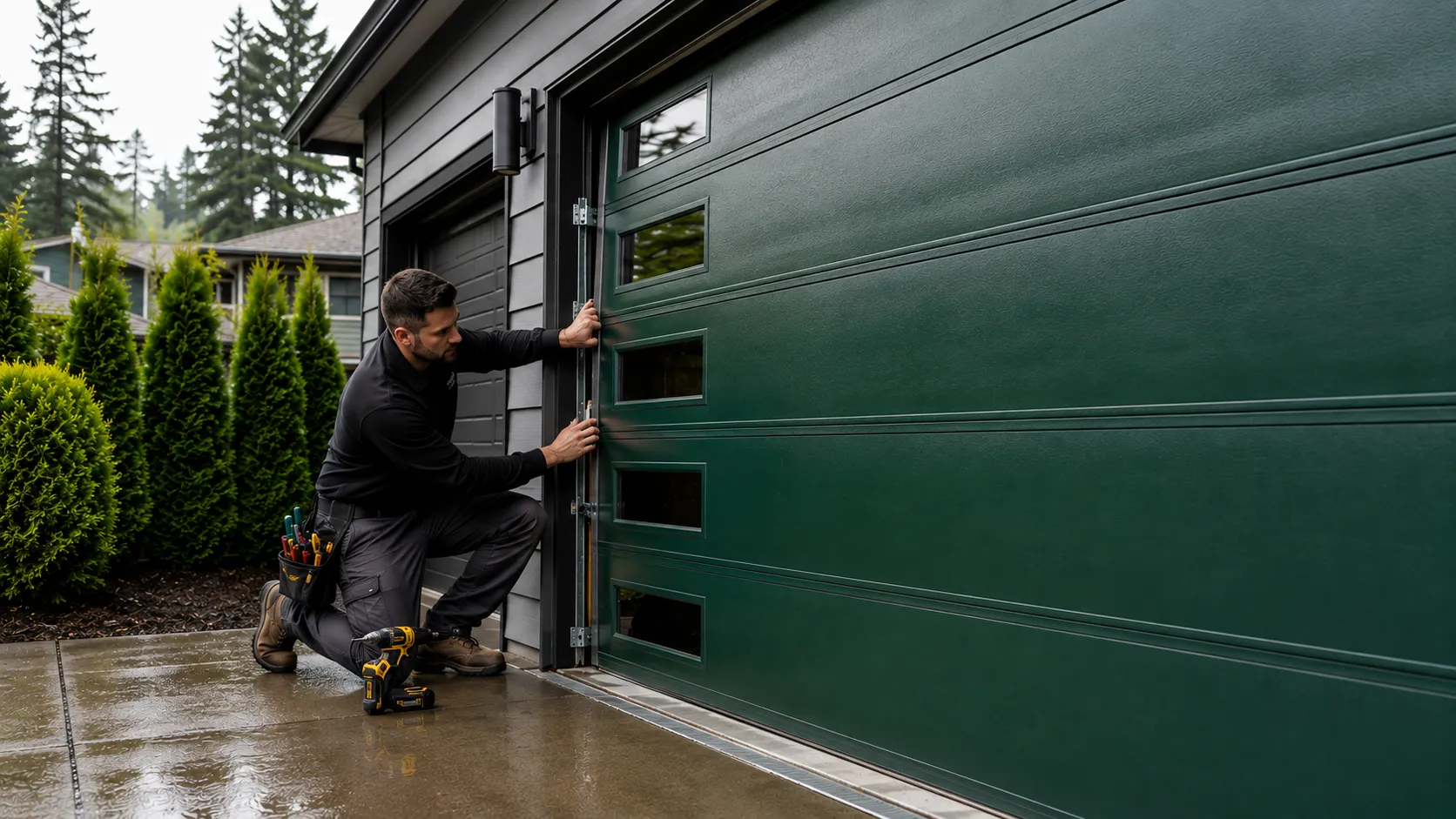
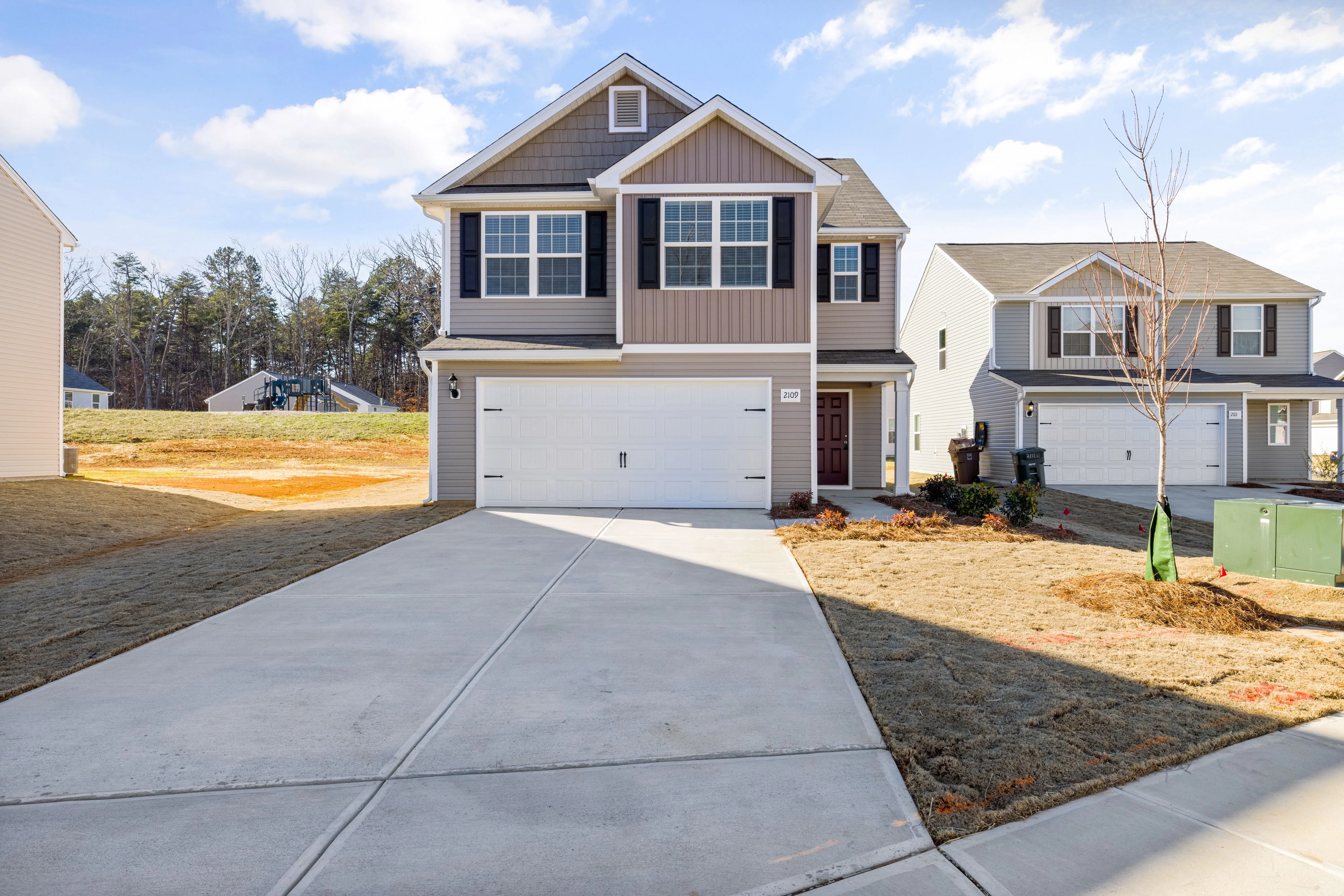
Boone's housing stock mostly went up between 1968 and 1997, with the typical build year sitting around 1979 - before thermal-break panels and modern weatherstripping specs were standard around here. So the generic fix doesn't touch the actual problem: a steel panel with no insulation layer, hung on galvanized track that was never rated for the temperature swings this area gets. Owners treat a hard-to-lift door as a spring problem when it's often the cold making the steel itself stiffer and the grease in the opener thicker.
Or they replace weatherstripping without checking whether the frame it's nailed to has shifted with forty-plus years of freeze and thaw. The fix that works on a house from 1995 in a mild climate can be the wrong fix on a house from 1979 in a severe cold band. Start with the age of the door and what it was built to withstand, not with a generic checklist.
The area
Checking It Yourself
Walk out to the door on a cold morning, not a warm afternoon - the problems that matter here show up when the temperature is actually down. Look at the bottom seal first. On an original-era door it's often just a flat rubber strip, not the compression-fit kind, and in severe cold it shrinks and pulls away from the concrete, leaving a gap you can see daylight through.
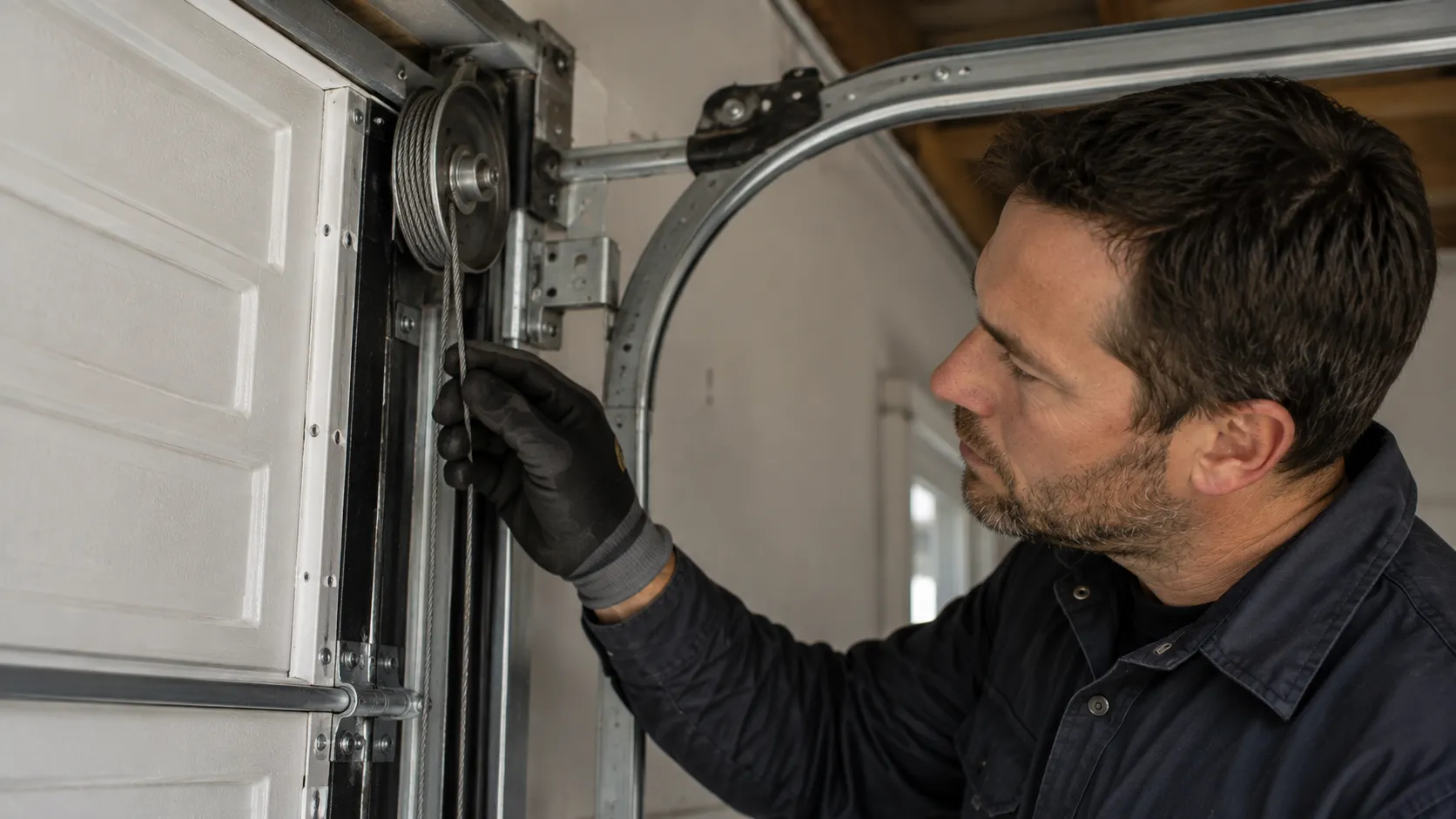
Next, open the door by hand with the opener disconnected. If it feels heavy or grinds partway up, that's the torsion spring losing tension as the steel contracts in the cold, not a broken spring yet, just one working harder than it should. Check the track brackets where they bolt to the frame - on houses from this era those brackets were often sized for a lighter door than what's on it now if the door's ever been replaced.
Frost on the inside of the panel itself, especially near the bottom two sections, tells you there's no insulation layer in there doing any work. None of this requires tools. It just requires looking on a day cold enough that the problem is actually happening.
What we find
What Is Going On
Steel contracts in the cold, and a lot more than people expect. On an uninsulated panel from the 1970s or 80s, that contraction happens fast and unevenly across the door, which is why a door that opens smooth in July can bind or rattle in January. The torsion spring is doing the same thing - cold steel is stiffer steel, so the spring that was sized to lift the door at 70 degrees is asking for more than it's built to give at 20. Add to that the fact that a lot of this area's original garage door hardware predates any wind-load rating requirement, so the track brackets and jamb fasteners were never engineered for the loads a modern code would require.
None of that means the door is unsafe sitting still. It means the margins are thinner than they'd be on a newer install, and small things - a slightly bent track, a spring a notch under its rated tension, a bottom seal that's lost its shape - show up as real failures faster here than they would somewhere with a milder winter and newer housing stock. The age of the house tells you more about what's likely wrong than any generic symptom list does.
How we work
What the Weather Here Does to It
Boone sits in a severe cold climate band, and that's the piece that turns an old-house quirk into an actual repair call. It's not just that it gets cold - it's the swing. A day that goes from mid-30s to well below freezing overnight puts stress on every joint in the door assembly: the hinges between panels, the roller in the track, the cable where it wraps the drum. Openers with steel gears and older grease formulations stiffen up enough in a hard cold snap that the safety reversal trips on doors that worked fine all summer, and owners assume the opener's failing when it's just doing what it's designed to do under load it wasn't getting warm-weather use.
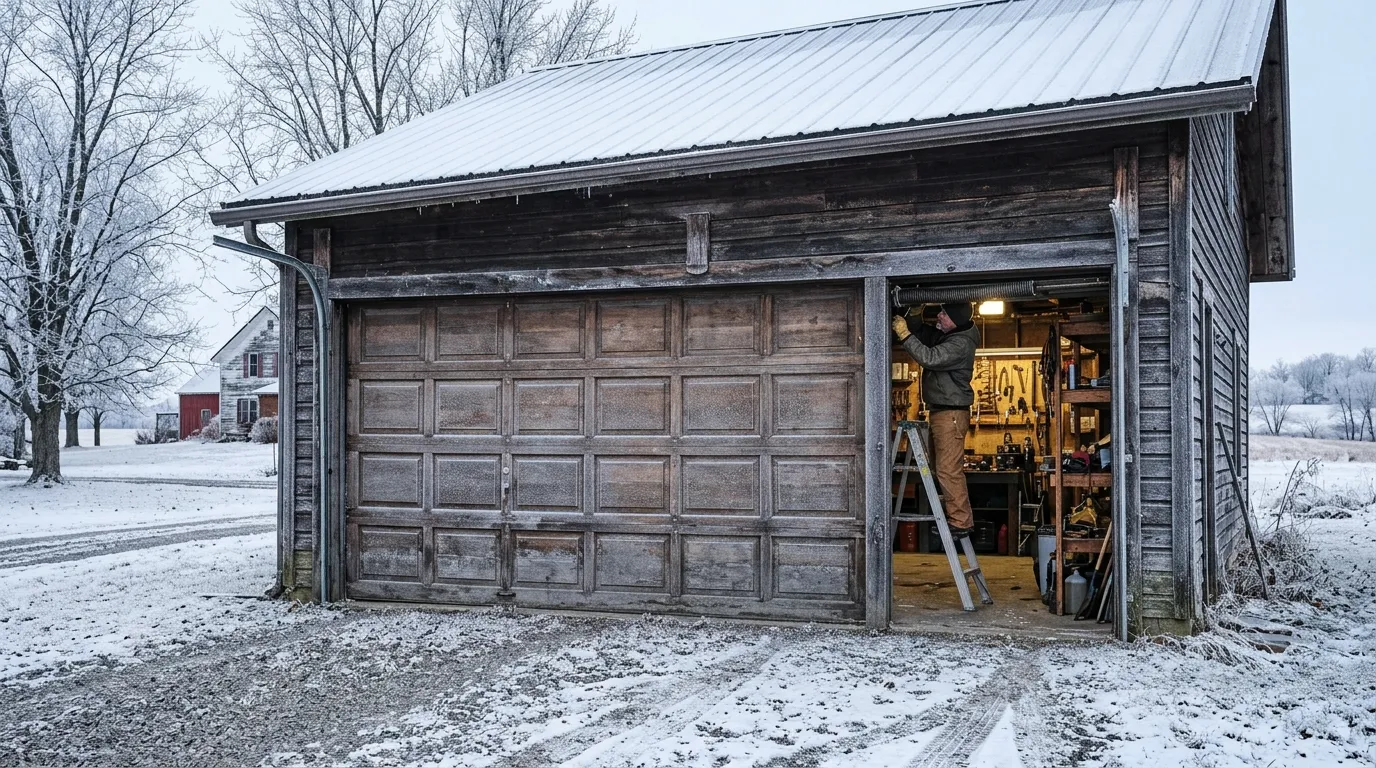
Snow load on the door itself is rarely the issue up here - it's the freeze-thaw cycling on the slab and the frame around the door that shifts things out of square over years, which then shows up as a door that won't seal or won't track straight. None of this is dramatic. It's cumulative, and it lands hardest on doors already built without much margin for it.
Questions
Common questions
Why does my garage door get harder to lift in the winter?
Cold steel is stiffer steel, so the torsion spring that was sized to lift the door at room temperature has to work harder once the metal contracts. On older doors here, built before insulated panels were standard, the panel itself is also heavier relative to its size than a modern one, which makes the effect more noticeable.
Is a gap under my garage door normal for a house this age?
It's common on doors from the 1970s-90s stock around here, where the bottom seal is often a flat rubber strip rather than a compression seal. It shrinks in severe cold and pulls away from the slab. It's worth fixing - that gap is where heat loss and drafts come from - but it isn't a sign the door itself is failing.
Should I replace an old door or just fix the seals and hardware?
Depends on the door. If the panel itself has no insulation and the track and springs are original to a house built in the 1970s or 80s, patching seals only gets you partway. We won't guess at that over the phone - it needs a look at the actual hardware and panel condition before that call makes sense.
My opener keeps reversing on cold mornings - is it broken?
Not necessarily. Cold-stiffened grease in the gear housing and a spring working harder than usual can trip the safety reversal on an otherwise healthy opener. Worth checking the spring tension and track alignment before assuming the opener itself has failed.
Ready when you are
Need a garage door sorted in Boone?
Boone Garage Door Pros repairs and installs garage doors, springs and openers in Boone, NC and the surrounding area.