Where People Go Wrong
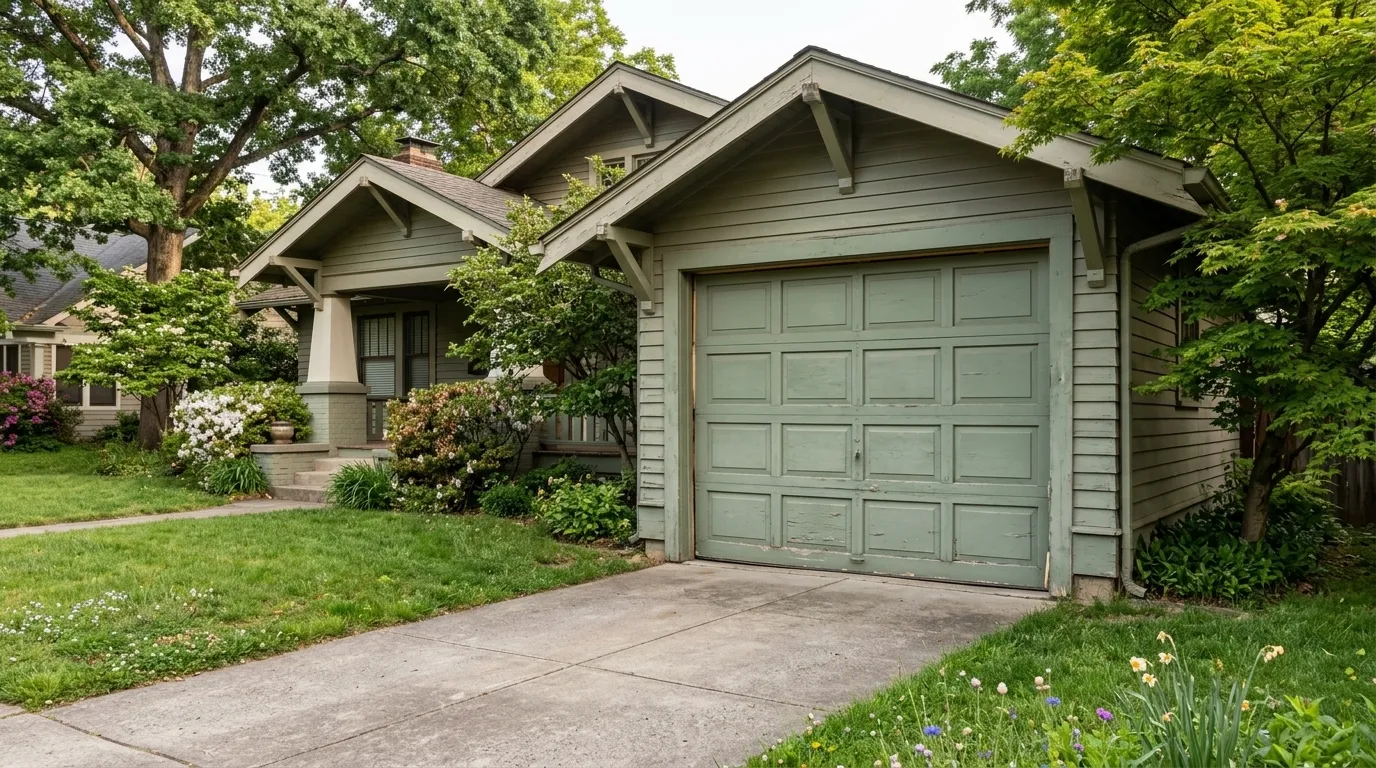
The most common mistake we see is treating every noise the same way. Somebody hears a squeal, sprays whatever's under the sink on it, and calls it fixed. Most houses in this stretch of the mountains went up between 1968 and 1997, with the median sitting around 1979, which puts a lot of original torsion hardware past its expected life. That's not a scare number, it's just math: springs and bearings from that era have had forty-plus winters to work through.
Across the ten named areas here, the stock is mostly 1960s and 70s construction, so a lot of these openers and tracks are original to houses that predate modern safety sensors. Owners assume a grinding noise is the same as a rattling noise, and it isn't. One means metal-on-metal wear inside a bearing. The other usually means a loose bracket. Spraying oil on a bracket problem does nothing, and spraying oil on a dry bearing just masks the sound for a week. People also wait too long because the door still opens - but a door that still works can still be one cold morning away from a spring letting go under load.
Checking It Yourself
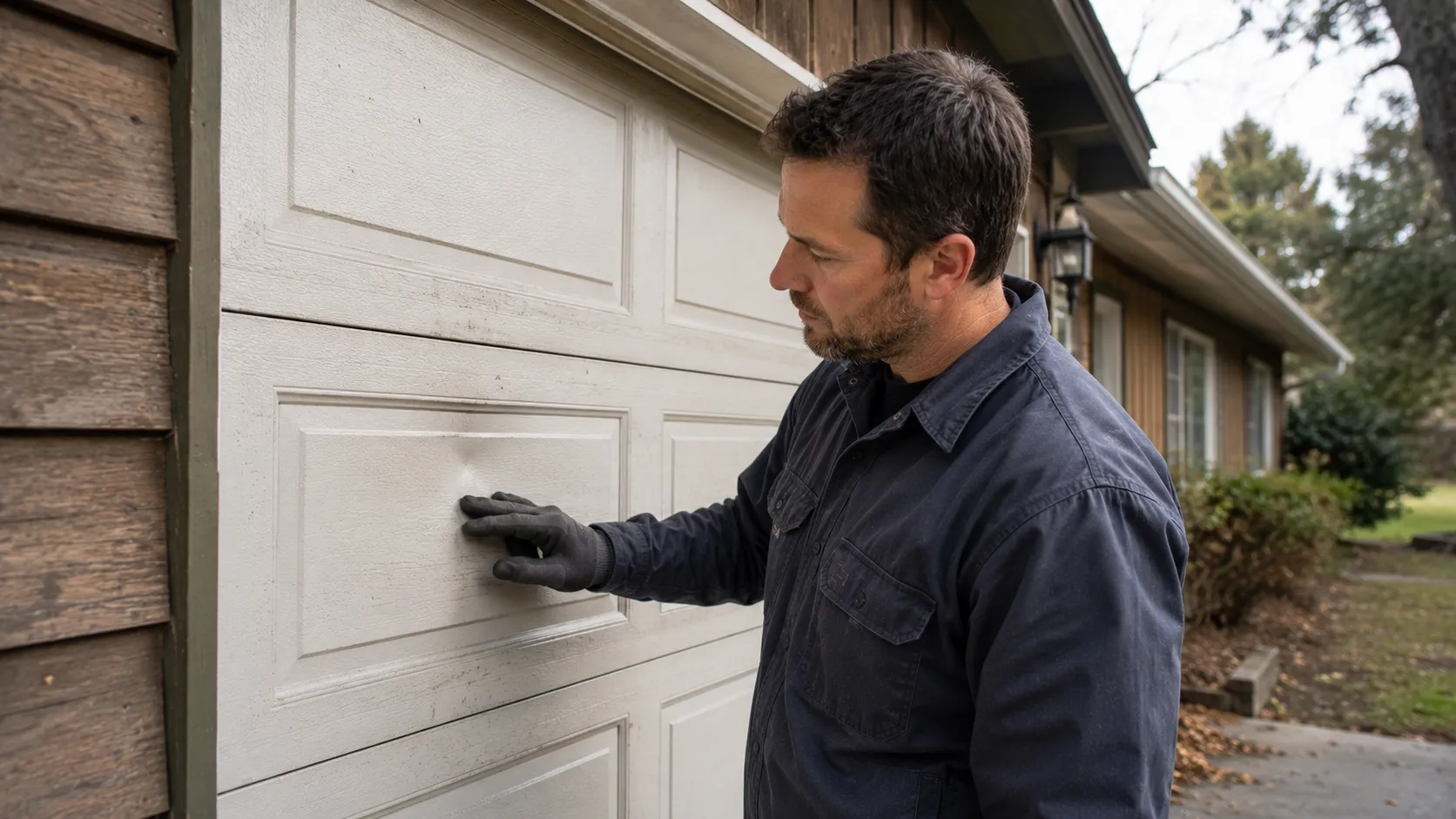
Before you call anyone, stand next to the door and run it up and down once with the light on. Listen for three different things, not one. A sharp pop on the way up, especially in the first few degrees of travel, usually points to a spring under uneven tension - common on doors original to houses built before the late 1990s. A steady grinding hum the whole way through points to a roller or bearing that's worn past its lubrication, which shows up more on hardware this old than on anything installed in the last decade.
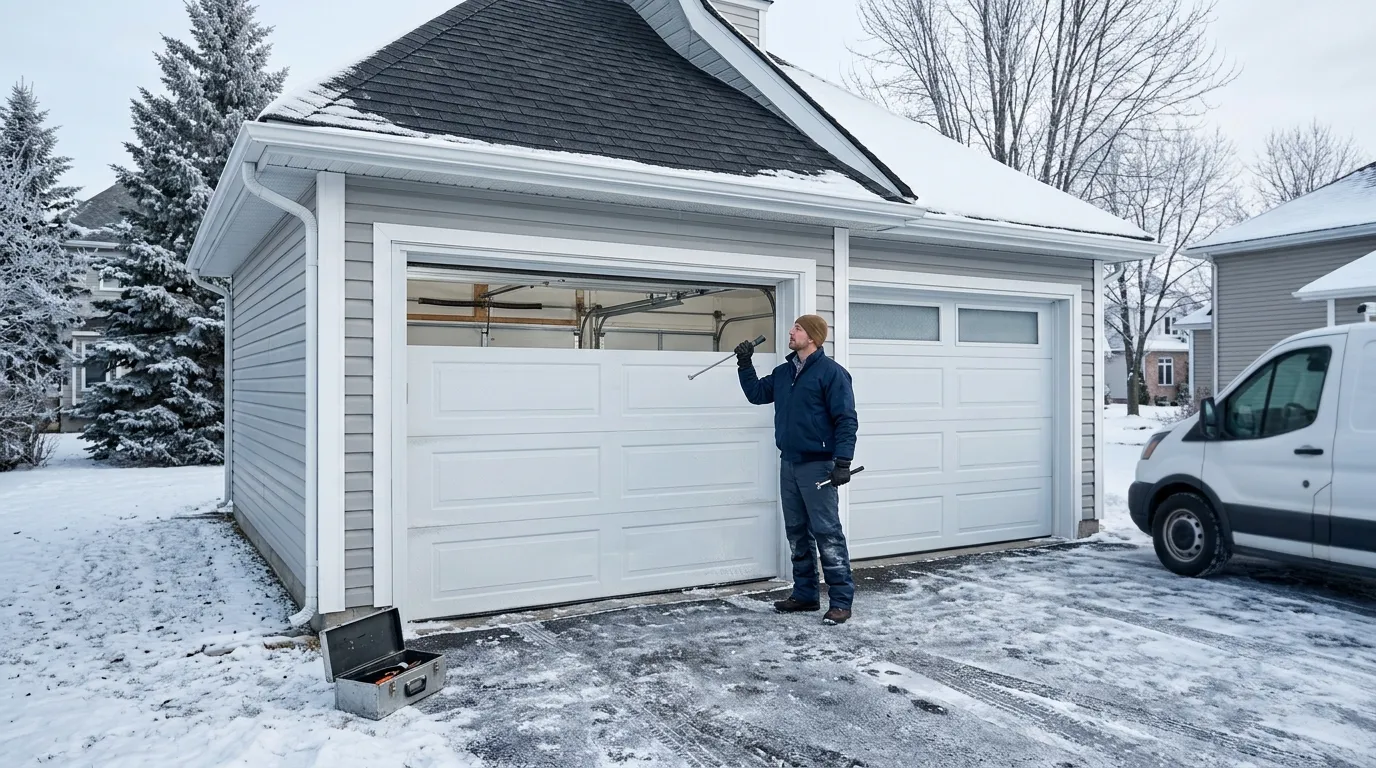
The third sound, a low groan right at start-up that fades after a few seconds, is the cold-climate one. Boone sits in a cold-severe climate band, and that means the grease in an old torsion spring thickens up every winter and makes the door groan on the first pull of the morning. If that groan disappears once the door's been run twice, it's the cold. If it doesn't disappear, it's the spring itself losing tension. We can't diagnose a spring's remaining life over the phone from a description of a sound - that one needs eyes on the coil.
What Is Going On
Garage doors in this area are carrying two kinds of age at once: the age of the house and the age of the climate exposure. A mile southwest along Sunset Road you'll find the same 1960s-70s stock that makes up most of the ten areas we're talking about here, and the hardware behaves the same way house to house - not because of one bad batch of parts, but because steel expands and contracts the same amount every winter regardless of who installed it.
With 3,578 households and 4,331 owner-occupied houses across the service area, a large share of them are still running the original opener that came with a house built before 1997. Original openers from that window weren't built with the auto-reverse sensors required today, and their gearing wasn't designed for the freeze-thaw cycle a mountain winter puts it through. The noise you're hearing now is usually the end stage of decades of that cycle working on a part that was never going to last forever - not a sudden failure, but a slow one finally announcing itself.
What the Weather Here Does to It
Cold-severe means more than cold mornings. It means the steel torsion spring, the track brackets, and the roller bearings all contract at a rate that puts real stress on the metal every single night from fall through spring. That stress is cumulative. A door in a mild climate can run on a slightly under-lubricated bearing for years. A door here can't, because the same bearing is contracting and expanding through a wider temperature swing every day of the cold season.
That's also why winter is when most of these hardware failures actually show up, even though the wear happened all year. A spring that was fine in August can seize or snap in January because the cold takes up the last bit of slack it had left. If your door has started groaning, popping, or grinding since the weather turned, that's not a coincidence - that's the climate doing exactly what it does to hardware this old. We don't recommend just re-lubricating an old spring and calling it done; once a spring's coils show rust or flat spots, replacement is the honest answer, not a patch.
Talk to a local pro
Garage door trouble in Boone?
Same-day service with honest, upfront quotes.