
Spring tension storage
The spring on a standard double door is wound with somewhere around thirty turns of stored tension, held by a pair of set screws on a shaft that's been sitting in an unheated garage for decades.
Boone, NC
Torsion spring repair for Boone homes built 1968-1997, where cold-climate steel fatigue and original hardware make broken springs a routine, predictable failure.
DIY or pro
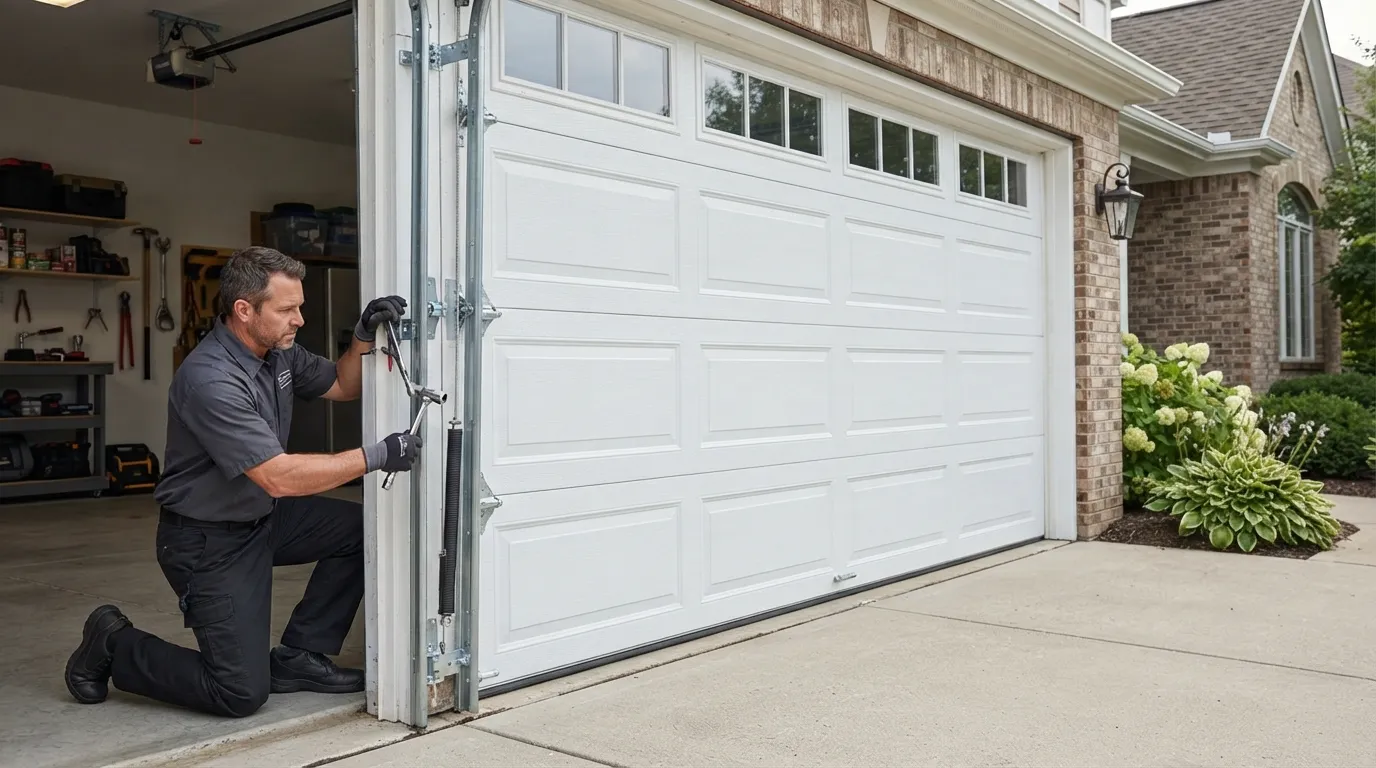
A torsion spring under load can put you in the ER faster than almost anything else in a house, and the videos that make it look like a twenty-minute job never mention that.
The spring on a standard double door is wound with somewhere around thirty turns of stored tension, held by a pair of set screws on a shaft that's been sitting in an unheated garage for decades.
If you don't own a winding bar set sized to that specific wind cone, or you try to improvise with a screwdriver, the bar can kick loose and take a finger with it. The real question isn't whether you can physically swap a spring - plenty of homeowners have.
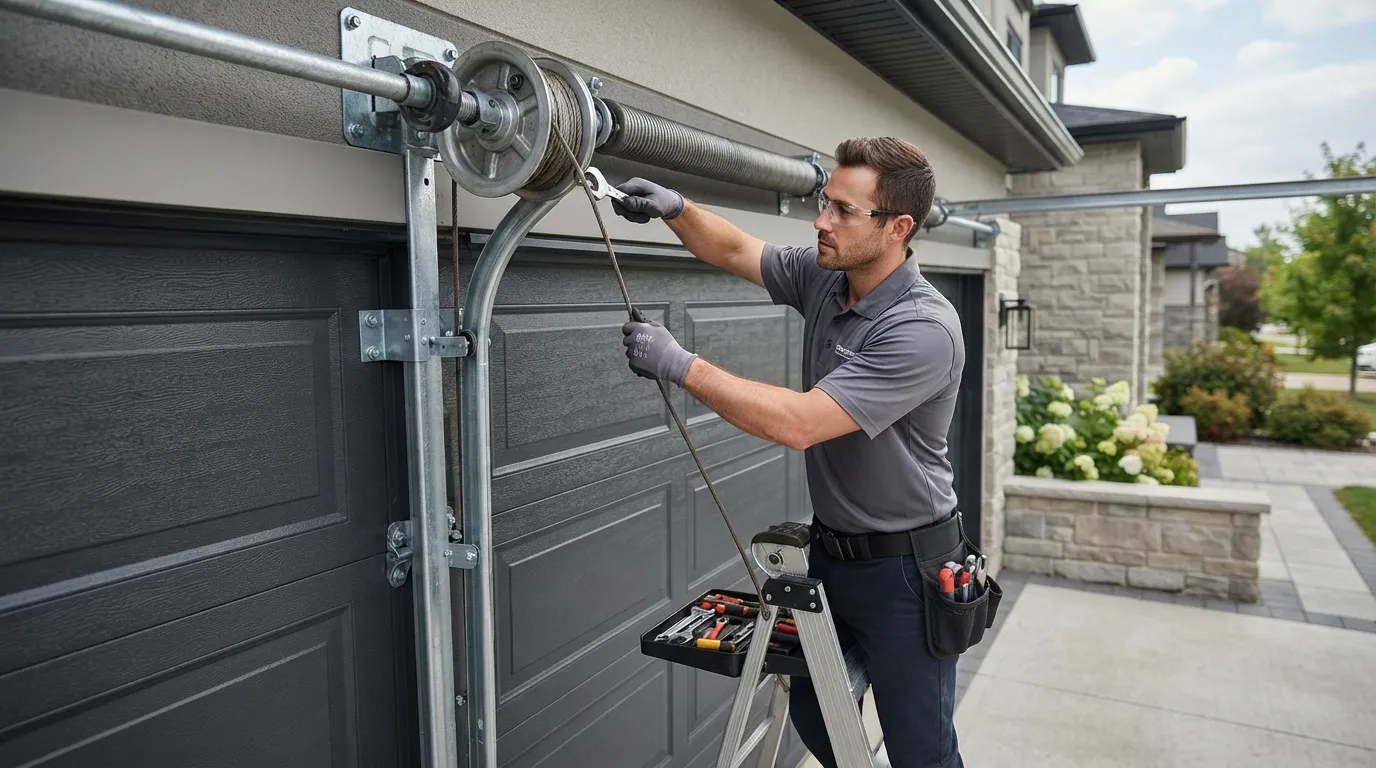
It's whether you can tell, before you start, if the cable drums, bearing plate, or end bearing under it are also worn out from the same age and same cold. A spring rarely fails alone in a house this age; it usually fails alongside something else that's been quietly wearing out next to it.
That's the part that turns a $200 job into a call for a tow truck when the door comes off the track halfway through. We're honest that some of these are simple swaps. If the rest of the hardware is sound, a straightforward spring replacement doesn't need a truck roll dressed up as an emergency.
Local causes
Housing across this service area was mostly built between 1968 and 1997, with the median landing around 1979, and the bulk of it sits in that same 1960s-70s construction wave across the ten named areas we work. That means a lot of original torsion springs, or first-generation replacements, are pushing forty-plus years of temperature swings without ever being touched. Steel fatigues on a cycle count, but cold makes it worse - Boone sits in a severe cold climate band, and repeated freeze-thaw stress on galvanized wire is exactly the kind of load that shortens spring life faster than a mild-climate town would see.
A spring rated for ten thousand cycles doesn't care how many cars go in and out - it cares how many times it's wound and unwound under stress, and cold steel is measurably more brittle at the moment it lets go. In a house built in the late 1970s, that spring has had every winter since to work-harden and crack at the coil. We see this pattern often enough across the service area that it isn't a coincidence tied to one street - it's the housing stock and the climate acting together.
Watch-outs
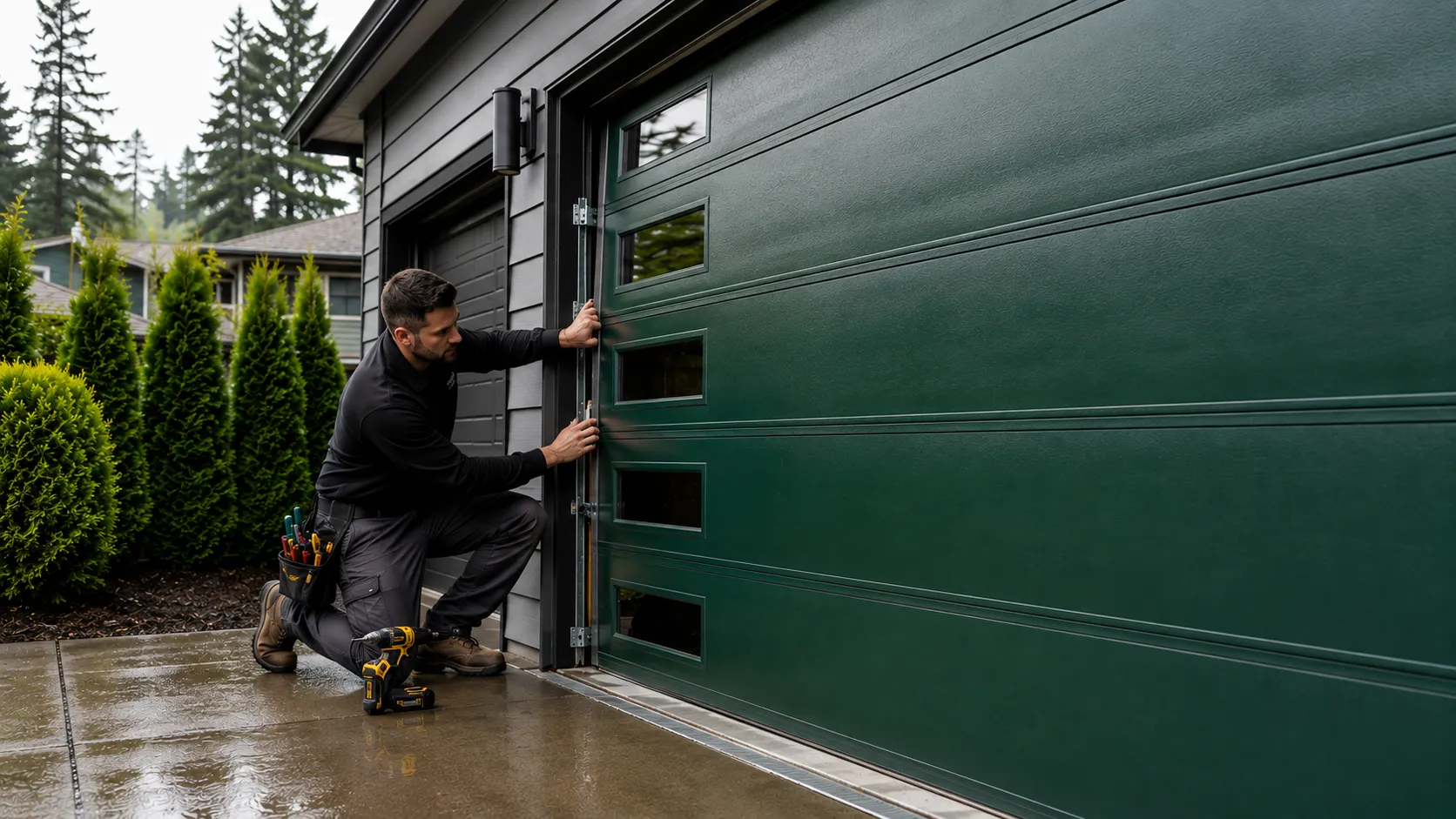
On houses from this era, the spring is rarely an isolated part. Original torsion setups from the 1968-1997 window often used lighter-gauge cable and drums than what's standard now, and once one spring goes, the opposite spring on a double door is usually close behind it - same age, same wear, same cold exposure.
Replacing one and leaving the matched spring alone is asking for a second call within a year. Bearing plates and center bearings from that period were built to different tolerances than current hardware, and cold makes old grease seize rather than lubricate.
If the shaft doesn't spin freely when we test it, a spring-only repair won't hold, because the new spring will be fighting a bearing that's already failing. We'll also tell you plainly where the line is: if the drums are cracked, the shaft is bent, or the door itself has sagged out of square from decades of an undersized spring compensating for it, spring repair stops making sense.
At that point you're paying twice - once for the spring, once again a season later for the opener that's been straining against a door that never should have run this long.
Warning signs
Most calls start the same way: the door won't budge, or it lifts a few inches and stalls. Sometimes there's a bang from the garage - that's the spring itself letting go, not the opener.
If you try the manual release afterward, the door will feel like it weighs three hundred pounds, because without spring tension, it does. A slower version shows up first: the opener starts straining on the way up, making a grinding pull sound it didn't make a year ago.
That's a spring losing tension gradually rather than snapping outright, common on the older torsion setups still in service through the 1968-1997 housing stock across this area. Either way, once a spring is compromised, running the opener repeatedly to force the door open puts real strain on the motor and gears, turning a spring call into an opener call.
Better to leave the door down and get someone out to look at the shaft, bearings, and both springs together, especially in a house old enough that the hardware has never been replaced.
Questions
Cold makes spring steel more brittle right at the moment of highest cycle stress, and this area sits in a severe cold climate band. A spring that's already fatigued from age snaps sooner in a hard freeze than it would in a milder climate, which is why winter calls spike.
It happens more than you'd think. A lot of the housing stock across this service area dates to 1968-1997 with a median build year around 1979, and torsion springs from that era were built for a fifteen-to-twenty year service life, not forty.
If both springs are the same age, which they almost always are on original hardware, we replace them together. One spring failing means the other is at the same fatigue point and close behind it - fixing one and leaving the other is a second service call waiting to happen.
You can, briefly, but you're making the opener do the spring's job. That strains the motor and gears and often turns a $200 spring repair into a spring-and-opener repair. If the door is straining or grinding on the way up, it's worth a look before it fails outright.
Explore more
Ready when you are
Boone Garage Door Pros repairs and installs garage doors, springs and openers in Boone, NC and the surrounding area.