Where People Go Wrong
Most calls we could take start the same way: the opener hums, the door doesn't move, and the homeowner assumes the motor died. Nine times out of ten it's the spring, not the opener. The opener was never strong enough to lift a garage door panel on its own - the torsion spring does that work, and the opener just triggers it.
Most houses across Boone's ten-plus service areas went up between 1968 and 1997, with the median build year sitting around 1979, which means a lot of original torsion springs are still doing work they were never rated for this long. A spring is rated in cycles, not years, and a cold climate adds stress every winter that a mild one wouldn't. People replace the opener, spend the money, and the door still won't lift right - because the spring underneath was the actual problem the whole time.
The other mistake is waiting. A spring that's starting to go doesn't usually snap without warning. It gets louder, the door starts drifting when you stop it halfway, or one side lifts before the other. Those are the signs to act on, not the day it lets go entirely.
Checking It Yourself
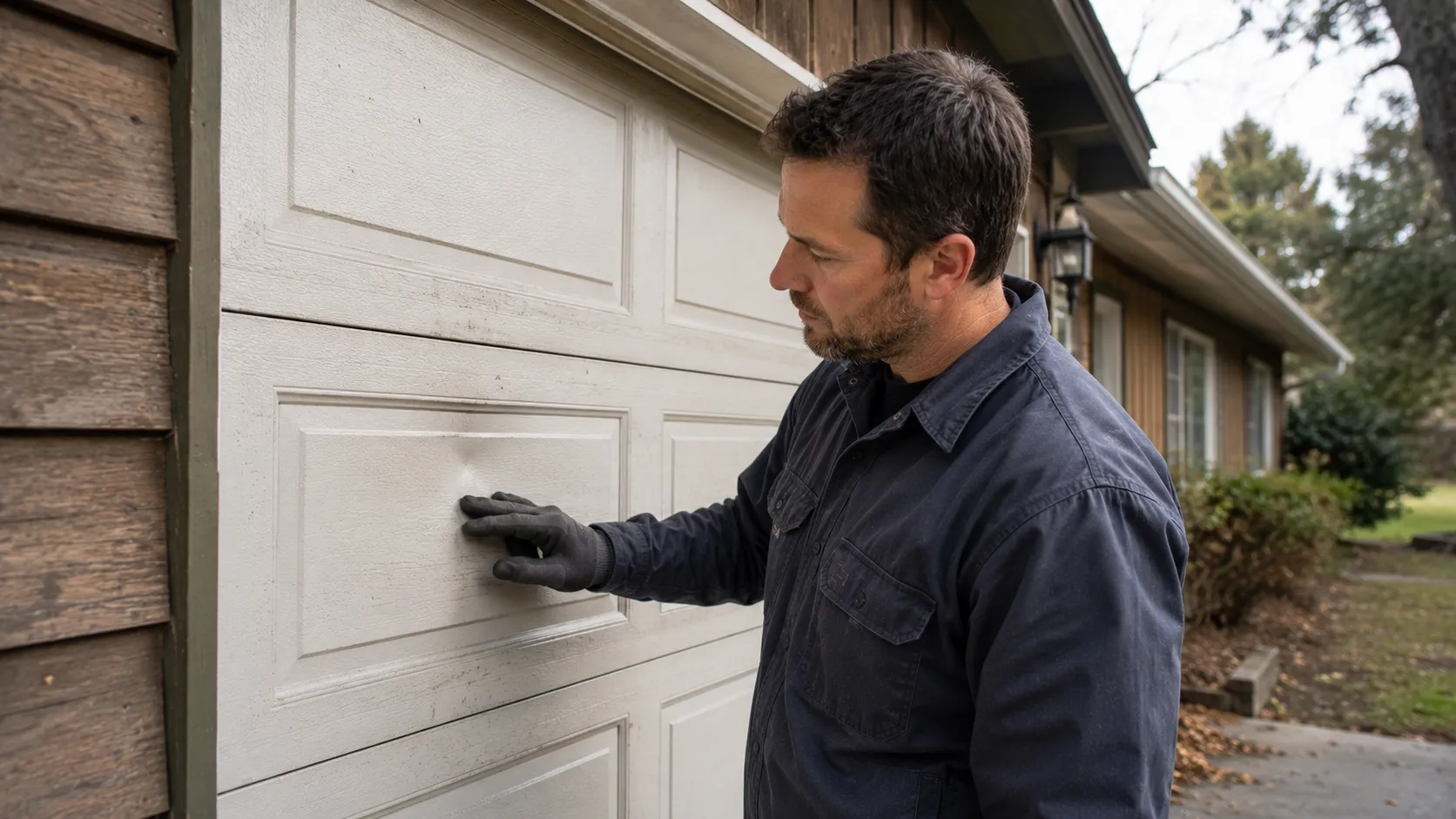
Close the door, disconnect the opener (there's a release cord hanging from the trolley), and lift the door by hand about halfway. A door with a healthy spring should stay put and feel close to weightless. If it drops on its own or feels heavy, the spring has lost tension.
Look at the spring itself, the coil above the door on the torsion tube. A gap in the coil, or one side visibly stretched more than the other, means it's compromised. Don't reach in and touch it - a wound torsion spring under tension can do real damage if it lets go while you're near it.
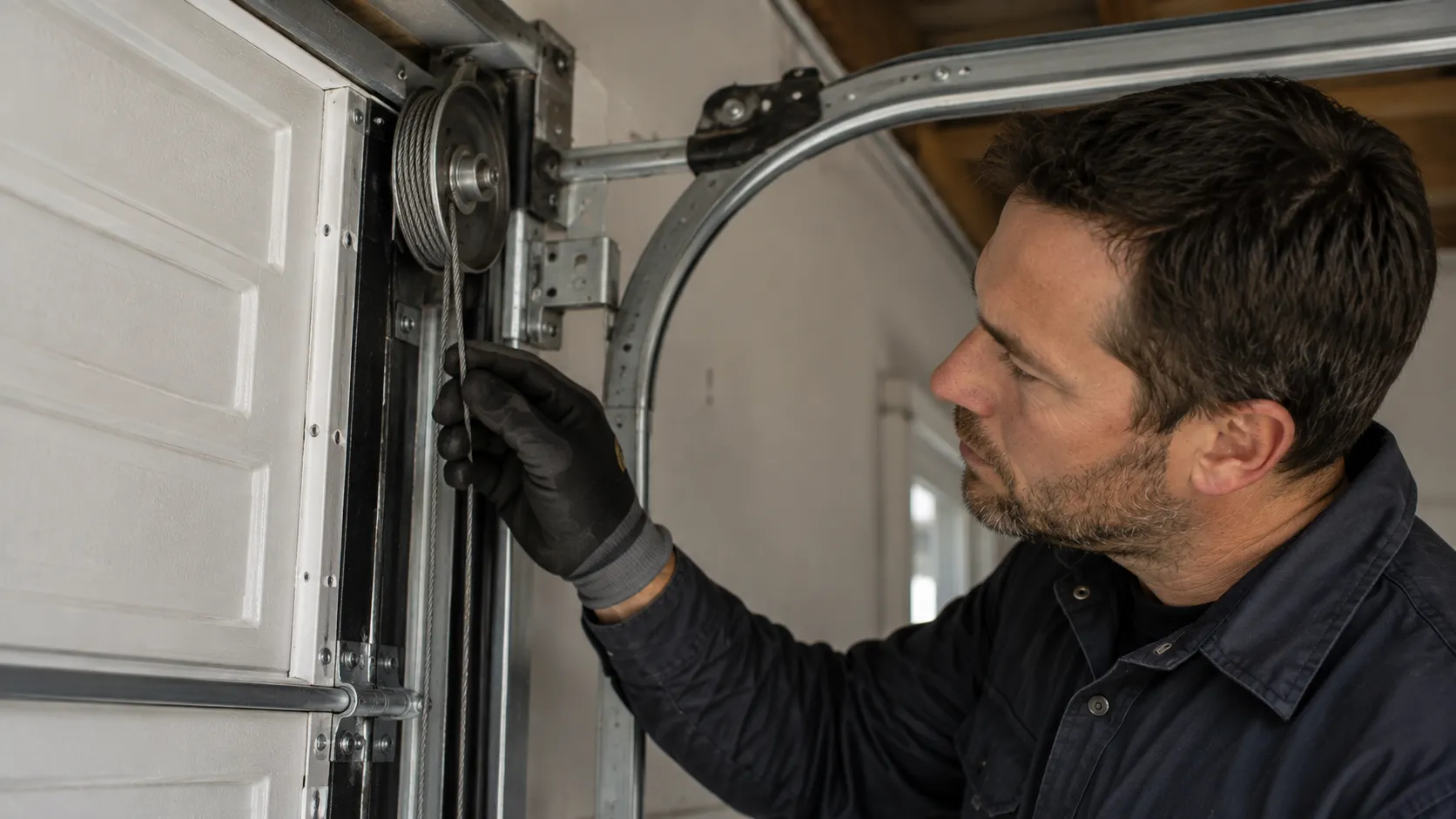
Check the cables next to the springs for fraying - thin strands sticking out like a frayed shoelace. If your house is one of the many built in the 1960s and 70s stock common to this area, the spring on your door was likely sized to a lighter panel than what's on it now, especially if the original door was ever swapped for a heavier insulated one. That mismatch shows up as a door that struggles more in winter than summer.
If the door won't budge by hand at all, stop. That's not a DIY tension adjustment - that's a call.
What Is Going On
Torsion springs are wound steel wire under constant load. Every open and close cycle flexes that wire slightly. Over enough cycles, the metal fatigues the same way a paperclip weakens after being bent back and forth - except a garage door spring is under far more tension and it's carrying real weight.
Boone sits in a severe cold climate band, and repeat freeze-thaw cycles are what actually fatigue the wire, not just one hard freeze. Steel contracts as it cools, which stiffens the coil and raises the load on any weak point in the wire. A spring that would have lasted another season in a milder climate goes in one cold snap here instead.
With 4,331 owner-occupied houses in the service area, a large share of them are old enough that the springs have already outlived one winter too many, even if the door still opens fine today. Age plus cold is a combination that doesn't announce itself - the spring looks the same right up until the coil separates.
Worth saying plainly: not every spring on the truck fits every door on the first visit. Some sizes need to be ordered, especially for older doors that used a nonstandard wire gauge builders don't use anymore.
What the Weather Here Does to It
Cold doesn't just make steel stiffer, it changes how the whole door moves. Rollers in aluminum tracks lose lubrication faster in the cold, so the door drags, which puts extra load back onto the spring that's already fighting the temperature. That's the chain reaction that ends with a snapped spring on the coldest morning of the year, not the mildest one.
Blowing Rock is six miles away, Beech Mountain twelve, and every one of these towns sits in the same severe cold band that stresses spring steel the same way. Seven Devils, Banner Elk, and Sugar Mountain aren't far off either - elevation up here means the temperature swings that fatigue a spring happen more often per winter than they would at lower ground.
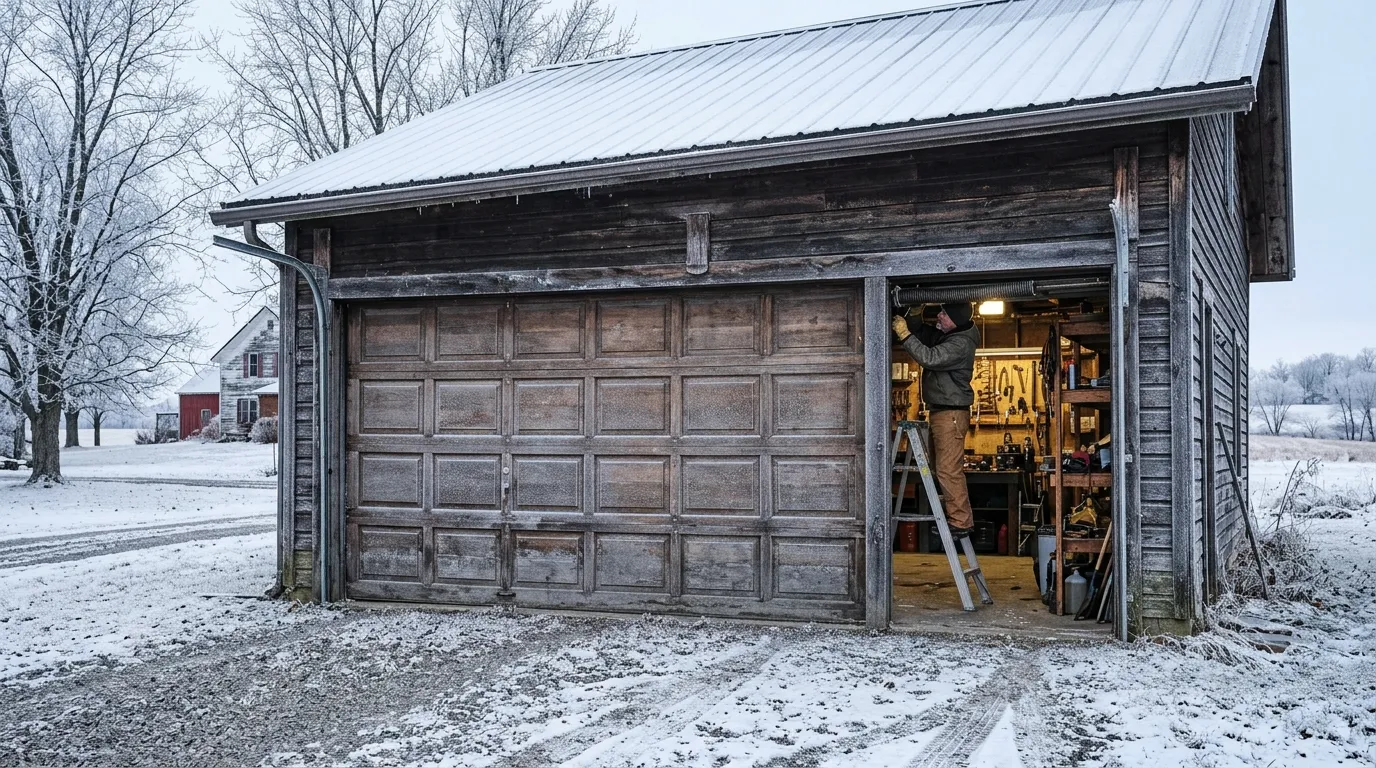
Garage doors facing north, or set into a wall that doesn't get afternoon sun, tend to run colder longer through the day. If your door is one of the originals from that 1968-1997 build window and it's on a shaded wall, that's about as hard a combination as this climate puts on a spring. It's not a reason to panic, it's a reason to get the tension checked before the temperature does the job for you.
Talk to a local pro
Garage door trouble in Boone?
Same-day service with honest, upfront quotes.