Where People Go Wrong
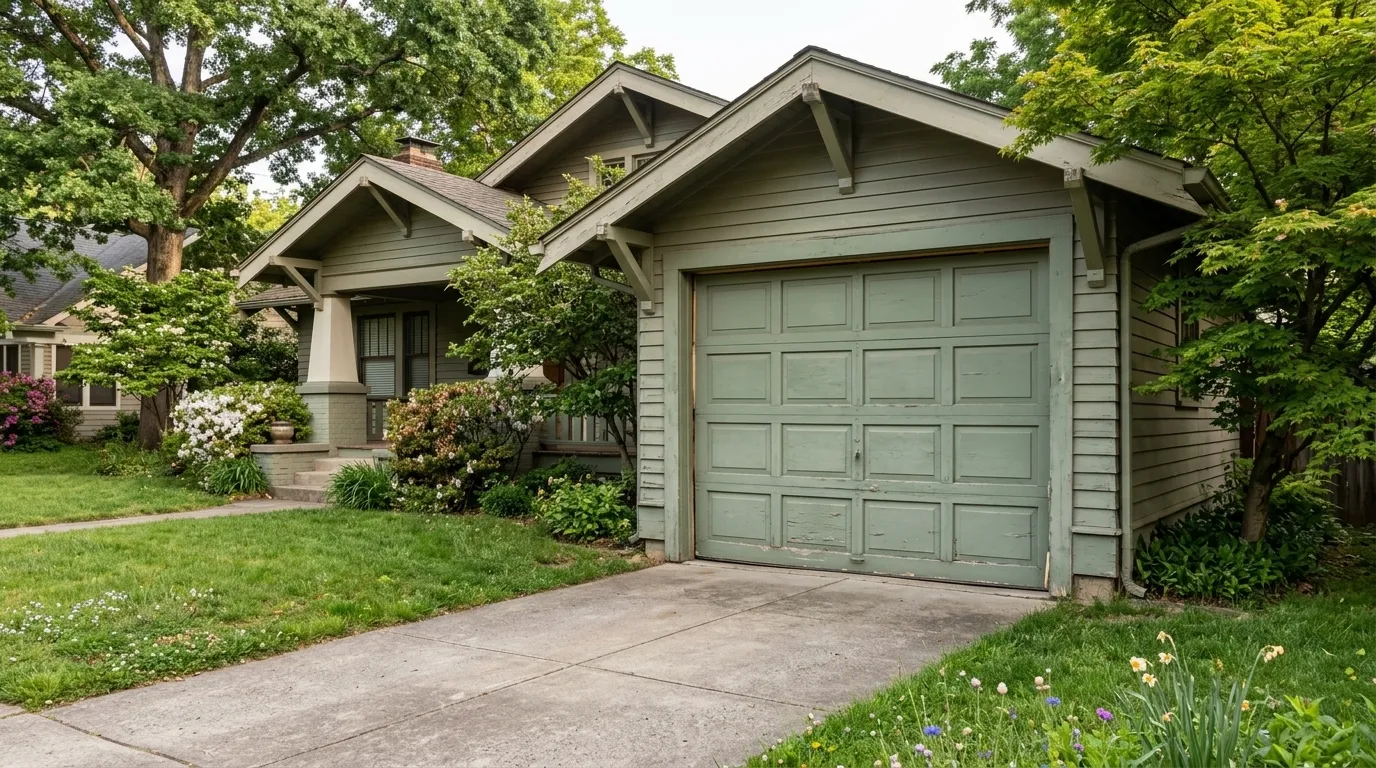
Most of the doors we get called out on in the Boone area aren't from some far-off decade - this town's housing stock runs 1968 to 1997, with a lot of it concentrated in that 1970s wave across the ten communities we work in, from Blowing Rock six miles away to Crossnore twenty miles south. That matters because people treat "old door" as a single category. It isn't. A door from 1970 and a door from 1995 have different steel gauges, different spring specs, and in a lot of cases different track widths. The mistake we see most: someone calls wanting a whole new door because a cable snapped, when the truth is the door itself - the panels, the frame - is fine and it's one part that failed. The opposite mistake happens too: patching a spring on a door that's been fighting rust and warped track for a decade, when the labor to keep chasing failures costs more over two winters than replacing the unit outright. Age by itself doesn't answer the question. What the door is made of, and how it's held up against a severe-cold winter here, does.
Checking It Yourself
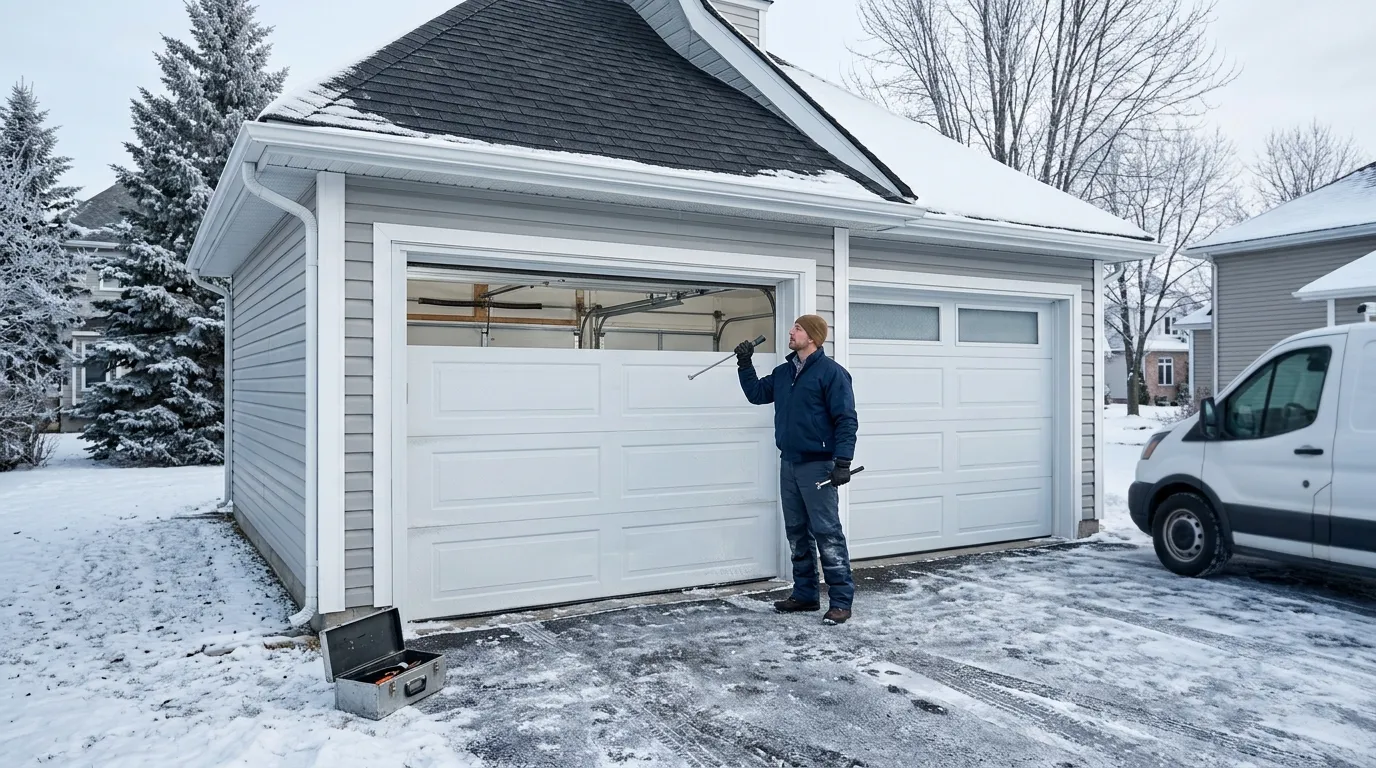
Before you call anyone, look at four things. First, the springs - stand to the side, never in front, and see if the door lifts evenly by hand with the opener disconnected; a torsion spring set that's lost tension will feel heavy on one side or won't hold the door open at all. Second, the track - run a hand along it for rust pitting or bends, which show up faster on doors that have spent twenty-plus winters in a severe-cold climate. Third, the panels - press on a bottom panel; if it flexes and cracks rather than giving slightly, the steel has fatigued. Fourth, check for daylight around the bottom seal and top corners; older doors from the 1968-1997 building years often have no foam core, and a gap that wide is heat walking straight out. None of this tells you the exact fix, but it tells you whether you're dealing with one bad part or a door that's failing as a system. If two or more of these show problems, that's the point where fixing it piecemeal usually costs more than a new door installed once.
What Is Going On
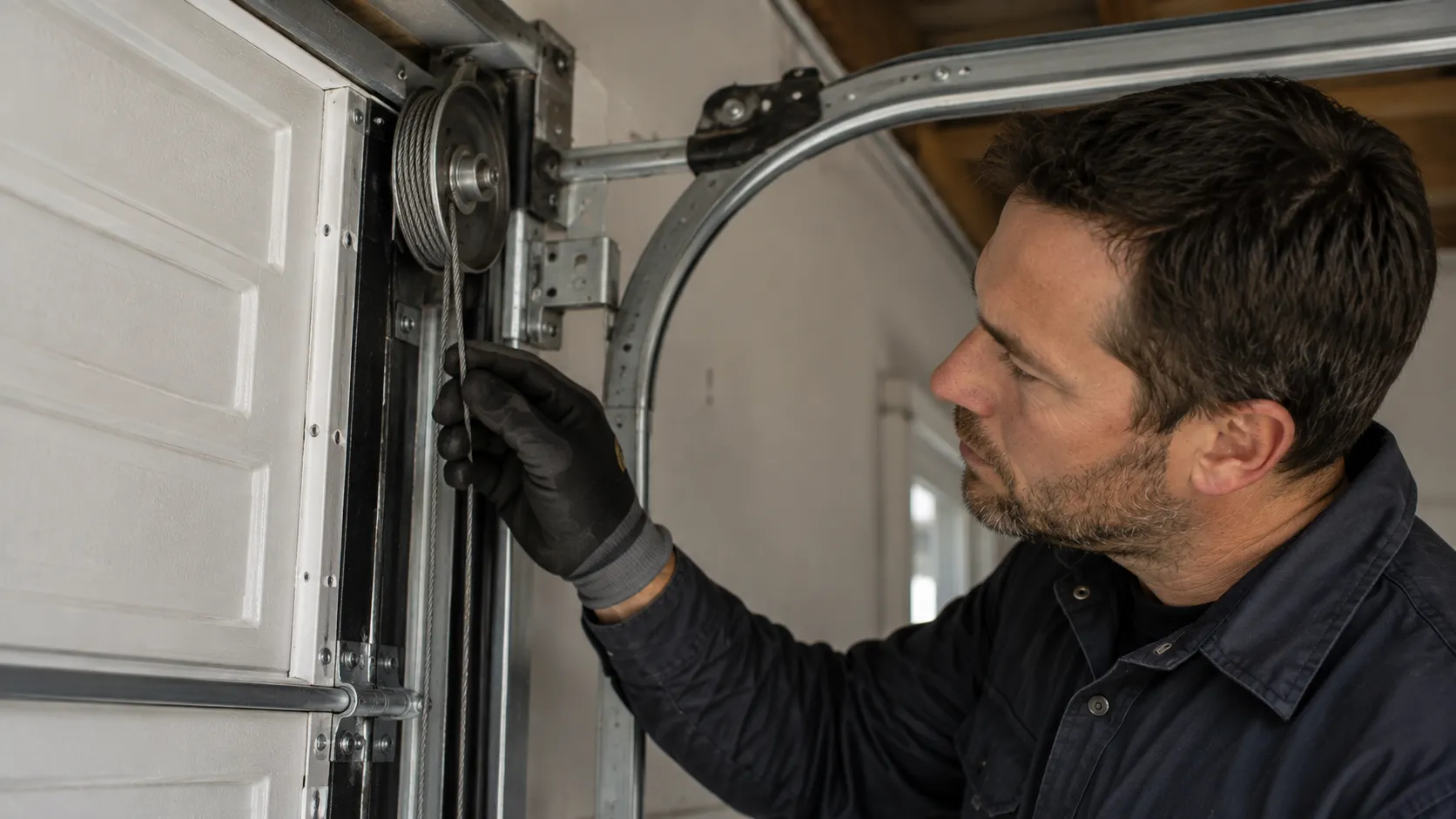
Here's the mechanical reality behind most of the older-door calls in this area. Houses built during Boone's main construction wave, 1968 through 1997, mostly went up with steel doors that use torsion springs wound to a standard tension for a specific door weight. Over time - and faster in a climate that swings hard between summer heat and severe winter cold - that spring loses wind count. It doesn't announce itself. The door just gets harder to lift by hand and the opener starts straining, which burns out the motor early. On the hardware side, doors from that era typically used steel rollers, not the sealed nylon kind, and steel-on-steel wears the track lip down until the door starts walking sideways on the way up. Neither problem is really about the door "being old." It's about which specific part inside a 1970s or 1980s door is at end of life. A door with solid panels and a bent track is worth fixing. A door with rusted-through panel seams from years of moisture and the same tired spring is usually past the point where fixing makes financial sense - that's the one honest limit here: once the steel itself has gone, no repair on the hardware fixes that.
What the Weather Here Does to It
Boone sits in a severe-cold climate band, and that's not a minor detail for a garage door - it's the reason winter calls spike. Steel contracts in the cold, which tightens tolerances on a track that was already worn from twenty or thirty years of use, and a door that ran fine in October starts binding in January. Torsion springs lose a measurable amount of lift capacity in hard cold, which is why a door that felt normal-heavy in summer can feel like dead weight some mornings. Grease and lubricant thicken too, and on an opener chain or a hinge that hasn't been serviced, that shows up as grinding or a door that stalls halfway. The communities out toward higher elevation - Seven Devils, Beech Mountain, Sugar Mountain - sit inside that same severe-cold band and see it worse, since elevation adds to the cold the door already has to fight. None of this is fixed by waiting for spring. A spring that's under-tensioned in January stays that way, and every lift in the meantime is added strain on the opener.
Talk to a local pro
Garage door trouble in Boone?
Same-day service with honest, upfront quotes.